Software Project Brief Template: How to Get Accurate Quotes from Developers
Use this software project brief template to define your requirements, set a realistic budget, and get clearer, more comparable quotes from software development agencies.
AgencyOra Editorial Team
Official Research & Editorial Team
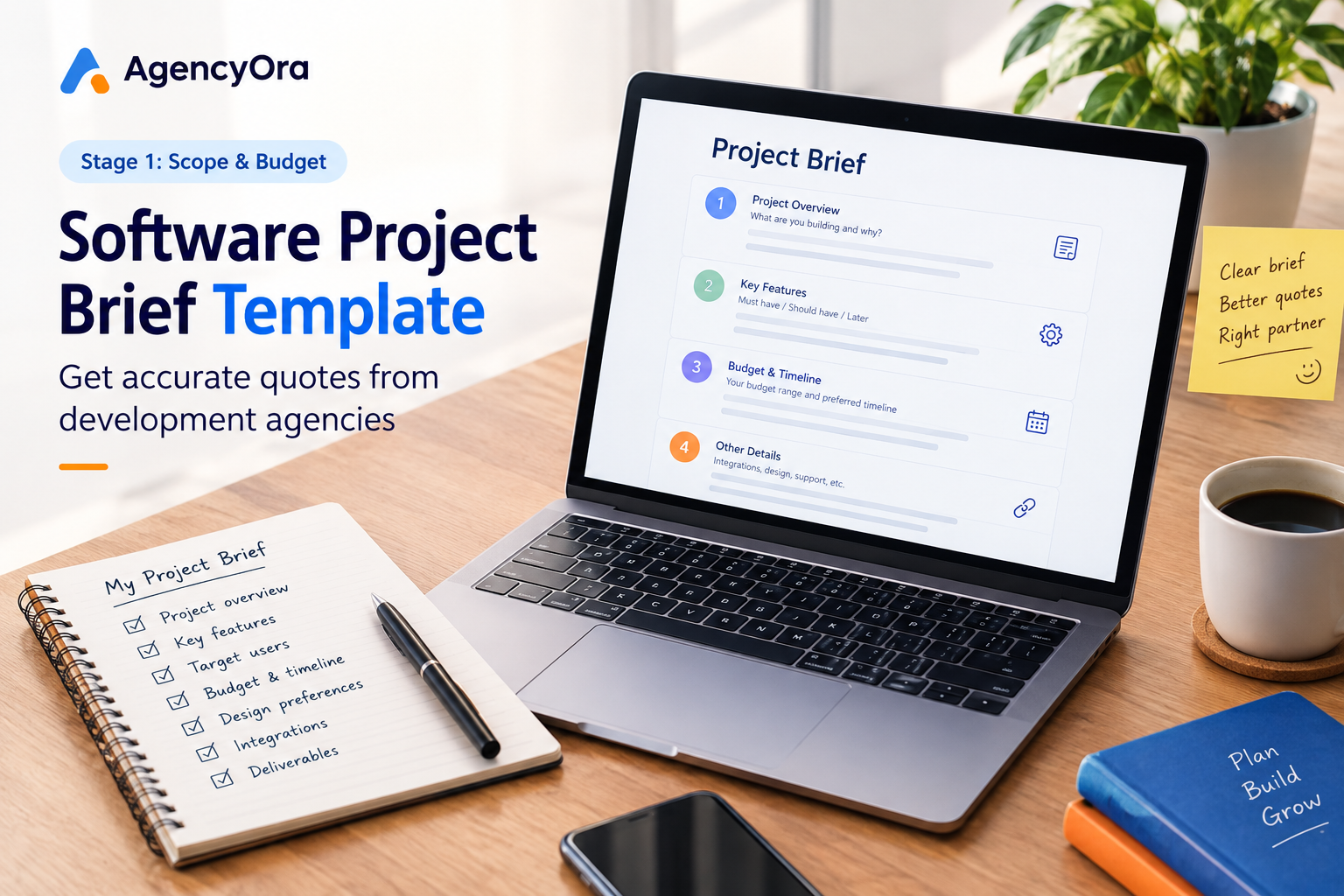
You have an idea for a website, mobile app, or business software. You contact three development companies, explain what you need, and wait for their quotes.
Then the estimates arrive: ₹2 lakh, ₹5 lakh, and ₹9 lakh.
Which one is right?
The problem might not be the developers or their pricing. Each company may have understood your project differently. One included only the essential features, another added integrations and an admin panel, and the third estimated a more complete product.
A clear software project brief helps every agency estimate the same project. You don't need technical knowledge to write one. You just need to explain the business problem, what the software should do, and what you expect to receive.
Here's a practical template you can use before requesting quotes.
What is a software project brief?
A software project brief is a short document describing what you want to build, why you need it, who will use it, and what the development team must deliver.
It gives developers enough information to understand your requirements and identify questions before preparing an estimate.
A good brief typically covers:
- The business problem you're trying to solve.
- Your target users and their needs.
- The essential features and functionality.
- Your budget range and preferred timeline.
- Any existing systems or integrations.
- Your expectations for design, security, and ongoing support.
You don't need to decide which programming language or database the agency should use unless you have a specific technical requirement. Let the development team recommend a suitable approach.
A software project brief template you can copy
Use the following structure and adapt it to your project.
1. Project overview
What are you planning to build, and why?
Describe the project in two or three sentences. Focus on the problem rather than listing every feature.
Example:
"We want to build an online appointment booking platform for a group of dental clinics. Patients should be able to view available appointments and book online, while clinic staff manage schedules through an admin panel."
2. Business goals
Explain what you want the software to achieve.
For example:
- Reduce the number of appointment calls handled by reception staff.
- Allow customers to book outside business hours.
- Reduce double bookings.
- Give managers a clearer view of clinic schedules.
Specific goals help an agency recommend the right features instead of simply building a list of requests.
3. Target users
Identify the people who will use the software and what each person needs to do.
For an appointment booking platform, users might include:
- Patients: Search for available appointments and book or cancel them.
- Clinic staff: Manage schedules and confirm bookings.
- Administrators: Manage users, clinic locations, and reports.
This matters because different user roles often require different screens, permissions, and workflows.
4. Features and priorities
Separate essential features from improvements that can wait until a later release.
Priority
Example features
Must have
Appointment booking, availability calendar, admin login
Should have
Email reminders, cancellation management
Later
Loyalty points, mobile app, advanced analytics
This is one of the most useful ways to control your initial development budget.
If you try to build everything at once, you may spend money on features that customers don't need yet.
5. Design and user experience
Explain how the product should look and feel.
Include any reference websites, screenshots, brand guidelines, or existing designs you like. Mention whether you need a new UI/UX design or already have approved designs.
Also specify important requirements, such as mobile responsiveness, accessibility, and ease of use.
You don't need to provide a finished design. Even two or three relevant examples can help the agency understand your expectations.
6. Budget and timeline
Give the agency a realistic budget range and your preferred launch date.
For example:
- Budget: ₹3 lakh–₹5 lakh.
- Target launch: Within 12–16 weeks.
- Priority: Release essential booking functionality first.
These are illustrative figures, not a market estimate for every booking platform.
If your budget is flexible, explain which features you can postpone. Ask the agency to identify the cost and timeline implications of different options.
A fixed launch date may also affect the scope. If the deadline cannot move, you might need to reduce the number of features in the first release.
7. Integrations and existing systems
List any external services the software must connect to.
Examples include payment gateways, accounting software, CRM systems, email services, inventory platforms, or existing databases.
If you're replacing an old system, mention whether existing customer records need to be migrated.
These details can affect both the development estimate and the implementation plan.
8. Deliverables and acceptance criteria
Explain what you expect to receive when the project is completed.
Your requirements might include:
- A working, tested application.
- Source code and agreed intellectual property rights.
- Deployment to your hosting environment.
- Documentation and administrator training.
- A defined warranty or post-launch support period.
Also explain how you'll decide whether a feature is complete.
For example, "Patients can book an available appointment and receive a confirmation email" is clearer than "The booking feature must work properly."
Agree on testing and acceptance criteria before development begins.
How to use the brief to compare agency quotes
Once your brief is ready, share the same document with every shortlisted development company.
When proposals arrive, compare more than the total price.
Check whether each proposal includes the same core features, design work, integrations, testing, deployment, and support. Ask agencies to identify exclusions, assumptions, third-party costs, and anything that could increase the price later.
If one estimate is significantly lower than the others, ask what has been excluded. If another is much higher, ask what additional value or functionality it includes.
You may discover that the proposals aren't actually offering the same scope.
The goal isn't to find the cheapest quote. It's to understand what you're paying for and which proposal best fits your business needs.
Common mistakes to avoid
Before sending your brief, check that you haven't:
- Described your idea without explaining the problem it solves.
- Listed features without identifying which ones are essential.
- Left the budget and timeline completely undefined.
- Forgotten integrations, data migration, or ongoing maintenance.
- Assumed that hosting, testing, and deployment are automatically included.
- Left ownership of the source code and deliverables unclear.
You don't need to know every detail before contacting an agency. Mark unanswered questions clearly and ask potential development partners to help resolve them.
Frequently asked questions
How long should a software project brief be?
For a small or medium-sized project, a few well-organized pages are often enough to start a meaningful discussion. Complex enterprise projects may require more detailed requirements and technical documentation.
Should I disclose my budget to a development agency?
Sharing a reasonable budget range can help agencies recommend an appropriate scope. If you don't know the likely cost, ask for options at different levels of functionality rather than requesting a single fixed quote without enough information.
Can I request quotes from multiple agencies using the same brief?
Yes. Sharing the same brief makes proposals easier to compare, provided every agency receives the same information and assumptions.
What if my requirements change during development?
Discuss the change with your agency before approving the additional work. Ask for its impact on cost, timeline, testing, and existing deliverables, and document the agreed change.
Find the right development partner
A good project brief makes the first conversation with a software development agency more productive. It helps you communicate your priorities, understand the estimates you receive, and reduce avoidable misunderstandings before work begins.
Once your requirements are clear, explore agencies based on their services, technology expertise, relevant projects, and client feedback.
Visit AgencyOra.in to discover software development agencies, compare potential partners, and send a project brief through the platform's direct RFQ feature.
The clearer your brief, the easier it becomes to find a development partner who understands what you're trying to achieve.
Ready to Find & Hire Vetted Agencies?
Compare verified agency portfolios, hourly rates, team sizes, and client reviews on AgencyOra's official marketplace directory.
Planning your next software or marketing project?
Calculate realistic engineering budgets with our Website Cost Estimator, create complete RFP scopes with the Brief Generator, or run Core Web Vitals audits with our Page Speed Checker.
Related Playbook Guides

ChatGPT SEO: How Businesses Can Get Found in AI Search
Want your business to appear in ChatGPT and AI search? Learn the practical website and content changes that can improve your AI search visibility.
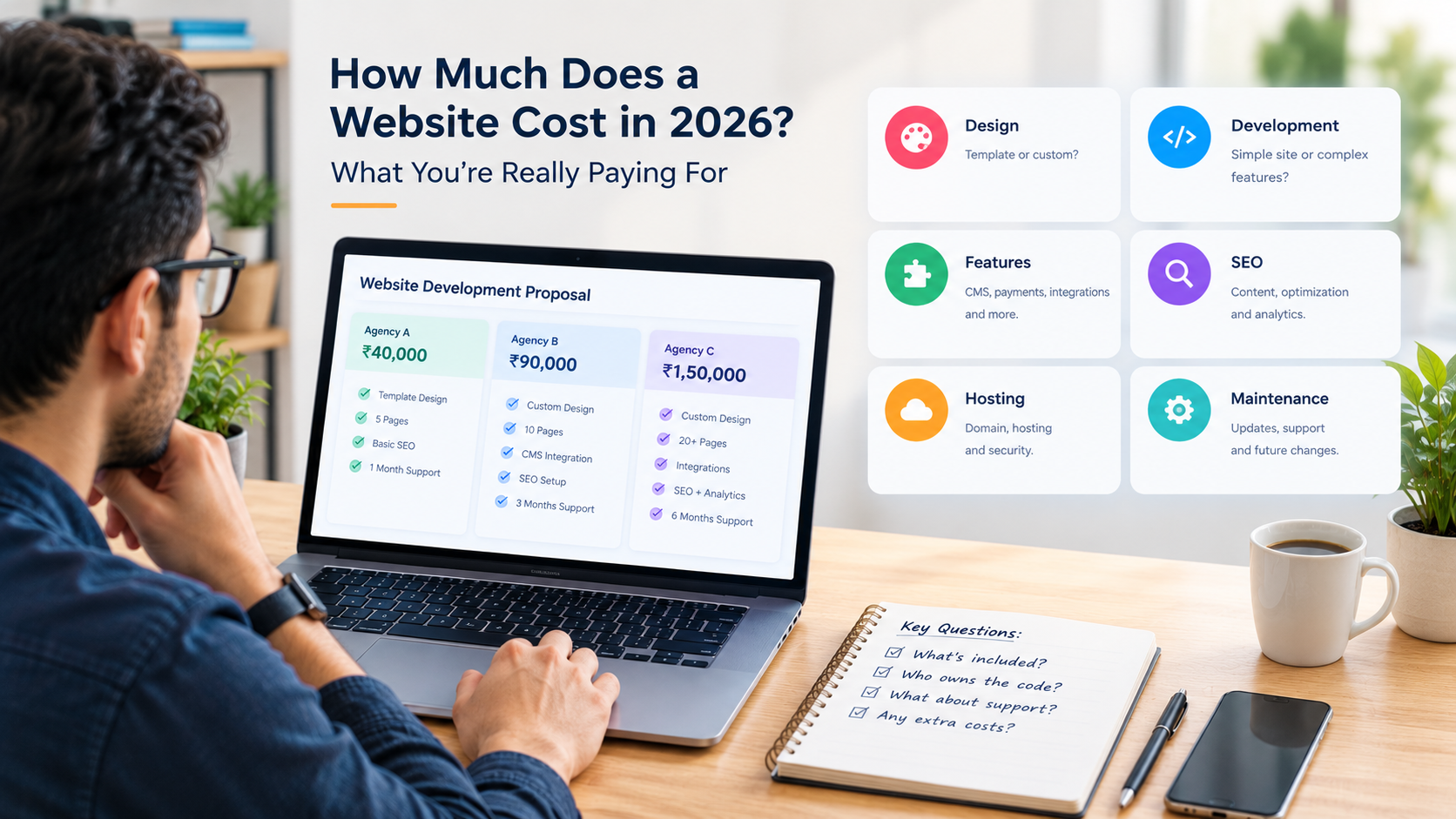
How Much Does a Website Cost in 2026? What You’re Really Paying For
Wondering how much a website costs? Learn what affects website pricing and what to check before accepting a development quote.

Why Your Website Is Not Getting Enough Leads: 7 Things to Check
Getting website visitors but not enough enquiries? Check these 7 common website problems that can stop visitors from becoming customers.