How to Compare Web Development Agency Proposals Before You Hire
Comparing web development agency proposals? Learn what to check beyond price, including scope, technology, timeline, ownership, support, and hidden costs.
AgencyOra Editorial Team
Official Research & Editorial Team
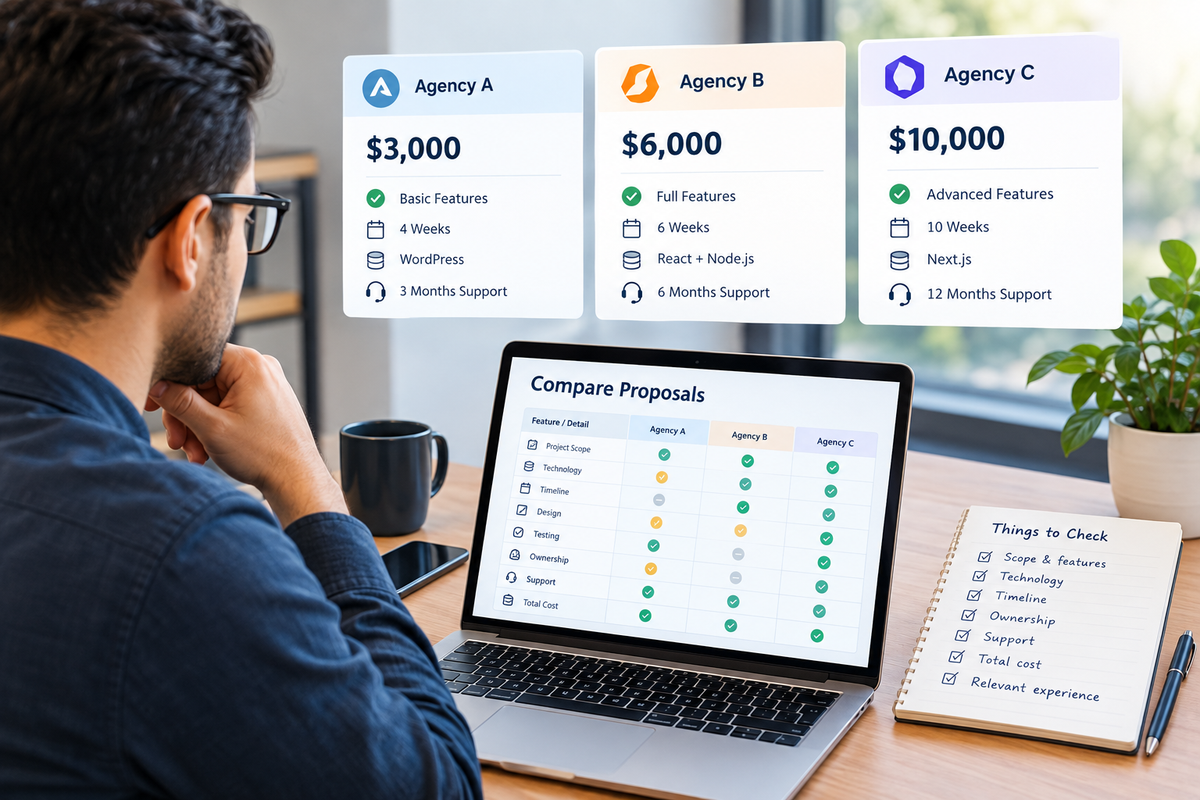
How to Compare Web Development Agency Proposals Before You Hire
Getting proposals from several web development agencies is easy.
Choosing between them is not.
One agency may quote $3,000, another $6,000, and another $10,000. That does not necessarily mean one agency is expensive and another is cheap.
The difference may be in the features, technology, support, timeline, or services included in the proposal.
So before choosing an agency, compare what you are getting, not just what you are paying.
1. Compare the project scope
Start by checking exactly what each agency has agreed to build.
For an ecommerce website, for example, check whether the proposal includes:
- Product management
- Shopping cart
- Checkout
- Payment gateway
- Customer accounts
- Order management
- Admin panel
- Search and filters
- Mobile responsive design
- Testing and deployment
Two agencies may both offer an "ecommerce website" while including very different features.
Create one list of your required features and mark each one as included, excluded, or additional cost.
This makes proposals much easier to compare.
2. Look beyond the technology name
You may see technologies such as Laravel, WordPress, Shopify, React, Next.js, or Node.js in different proposals.
Do not choose an agency simply because you recognize a technology.
Instead, ask:
Why is this technology suitable for my project?
The agency should be able to explain how the technology fits your requirements, expected traffic, future development, and maintenance needs.
3. Check the timeline
A proposal saying "4 weeks" does not tell you everything.
Find out whether the timeline includes:
- UI/UX design
- Development
- Content entry
- Testing
- Revisions
- Deployment
Also ask what the agency needs from you during the project.
Content, approvals, product information, and third-party access can all affect the delivery date.
4. Understand what happens when requirements change
Your requirements may change once development starts.
You may want to add another payment gateway, dashboard, integration, report, or feature.
Ask the agency:
How do you handle additional requirements?
A good proposal should explain how additional work is estimated and approved before development begins.
This prevents many misunderstandings later.
5. Check ownership
Before signing, make sure you understand who owns the project.
Ask about ownership of:
- Source code
- Database
- Design files
- Domain
- Hosting
- Third-party accounts
- API accounts
You should also know how you will receive access to these resources.
Do not leave ownership unclear until the project is finished.
6. Look at support after launch
Your website still needs attention after it goes live.
Ask:
- How long is post-launch support included?
- What counts as a bug?
- Is maintenance included?
- How are new features charged?
- How quickly are support requests handled?
- Are hosting and third-party costs separate?
These details can affect your real project cost over time.
7. Check relevant experience
A large portfolio does not automatically mean an agency is suitable for your project.
Look for projects similar to yours.
If you need an ecommerce website, check their ecommerce work.
If you need a SaaS application, look for experience with dashboards, user accounts, APIs, subscriptions, and similar systems.
Ask:
"Which project in your portfolio is most similar to mine?"
Then look at the actual website if it is available.
8. Compare the total cost
Do not compare only the development price.
Check whether the proposal includes or excludes:
- Hosting
- Domain
- Premium software or plugins
- API costs
- Email or SMS services
- Payment gateway costs
- Maintenance
- Content
- SEO
A lower initial quote may not be cheaper once additional costs are included.
At the same time, a higher quote is not automatically better.
You need to understand why the prices are different.
Questions to ask before hiring
Before making your decision, ask each agency:
- What exactly is included in the price?
- What is not included?
- Why do you recommend this technology?
- What is the expected timeline?
- Who will work on my project?
- How are additional requirements handled?
- Who owns the source code?
- What support is included after launch?
- What additional costs should I expect?
- Can you show me similar projects?
The answers can tell you much more than the proposal price.
Final thought
Choosing a web development agency is not about finding the cheapest proposal or the agency with the longest portfolio.
It is about understanding what you are getting, how the project will be handled, and what happens after launch.
Compare the scope, timeline, technology, ownership, support, and total cost before comparing the price.
If you are looking for agencies for your next web development project, you can explore relevant agencies on AgencyOra by service, location, technology, and other requirements.
Ready to Find & Hire Vetted Agencies?
Compare verified agency portfolios, hourly rates, team sizes, and client reviews on AgencyOra’s official marketplace directory.
Related Playbook Guides
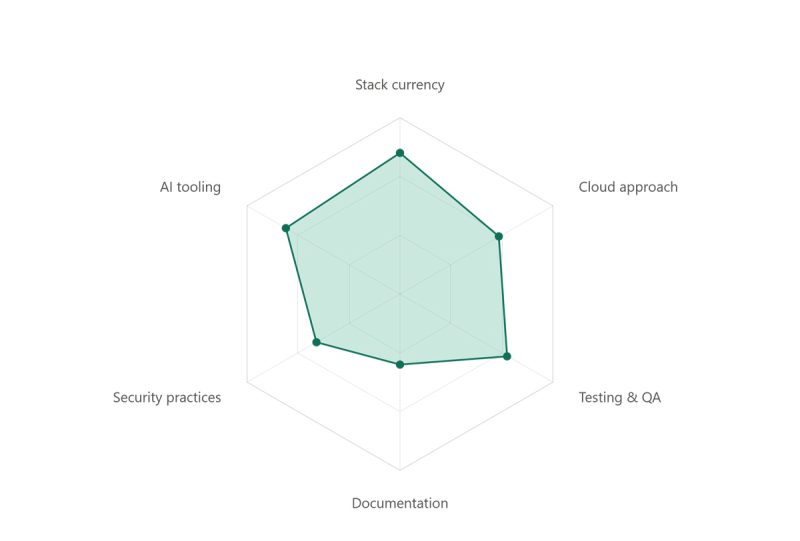
Tech Radar: How to Evaluate an Agency's Technology Stack Before You Commit
A buyer's guide to reading an agency's tech stack — what to check, which trends matter in 2026, and the red flags that signal outdated engineering practices.
How to Hire a Web Development Agency (2026 Buyer's Guide)
A good web development agency will ask you good questions, show you real work you can verify, be specific about pricing and scope changes, and put IP ownership in writing without hesitation. If any of those feel like friction, that's information — not an inconvenience to push past.
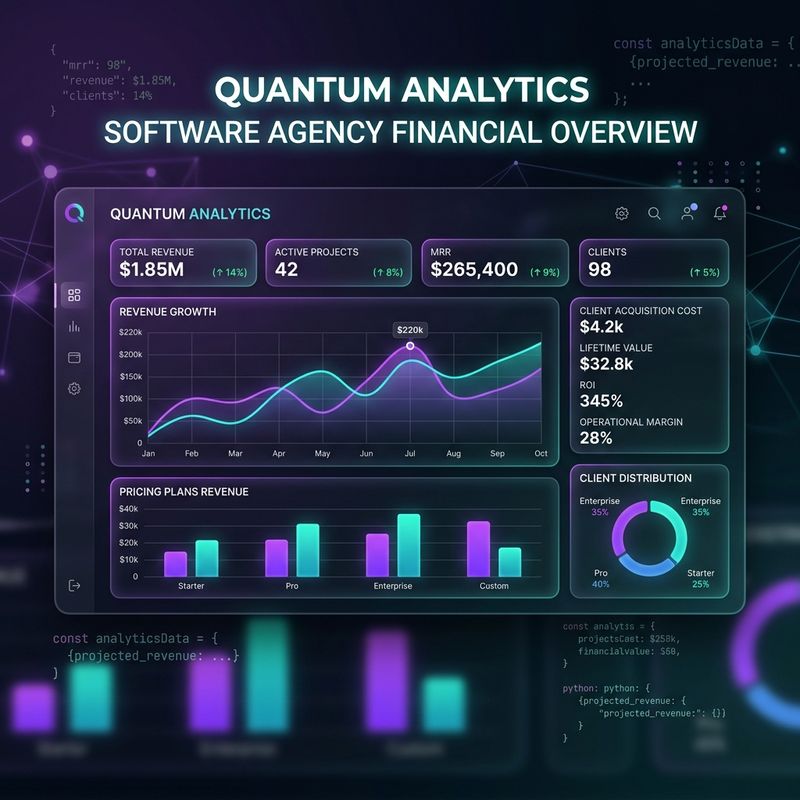
Software Development Agency Pricing & Cost Guide (2026 Benchmarks)
A comprehensive 2026 cost guide detailing software agency hourly rates, fixed-price project estimates, and scoping frameworks.