How to Hire a Web Development Agency (2026 Buyer's Guide)
A good web development agency will ask you good questions, show you real work you can verify, be specific about pricing and scope changes, and put IP ownership in writing without hesitation. If any of those feel like friction, that's information — not an inconvenience to push past.
AgencyOra Editorial Team
Official Research & Editorial Team
How to Hire a Web Development Agency: A Buyer's Guide for 2026
Hiring a web development agency is a bigger decision than it looks. You're not just buying a website or an app — you're picking a team that will hold your codebase, your timeline, and often your first impression with customers. Get it wrong and you're looking at blown budgets, missed launches, or a rebuild six months later.
Here's what to actually check before you sign anything.
1. Define the project before you talk to anyone
Agencies quote wildly different numbers for the same request because buyers describe projects differently. Before reaching out, write down:
- What you're building — marketing site, e-commerce store, web app, internal tool
- Must-have features vs. nice-to-haves — be specific ("user accounts with saved payment methods," not "login stuff")
- Your rough budget range — even a wide range narrows the field fast
- Your timeline — and whether it's flexible or hard-locked to an event/launch
Agencies that ask you clarifying questions before quoting are usually more reliable than ones that fire back a number in an hour.
2. Check the tech stack matches your actual needs
Every agency has a stack they're best at — and will often steer you toward it, whether or not it's right for your project. Ask directly:
- What stack do you recommend for this, and why?
- What happens if I need to hire another team to maintain this later — is it built on common, well-documented tools, or something proprietary to your shop?
- Can I see a live project you've built on this same stack?
A good agency explains trade-offs. A red flag is an agency that only has one answer regardless of what you're building.
3. Look past the portfolio — check for a real reference
A polished portfolio shows design taste, not delivery reliability. Before committing:
- Ask for one client reference you can actually contact — not just a testimonial quote on their site
- Ask that reference: did the project ship on time? Did the budget change mid-project? Would you hire them again?
- Check if the portfolio project is still live and working — dead links to "past work" are a quiet warning sign
4. Understand how they price and bill
Web dev agencies typically price one of three ways, and each carries different risk:
- Fixed price — predictable, but scope changes get expensive fast and can create friction
- Time & materials (hourly) — flexible, but requires you to track progress closely or costs can drift
- Retainer — best for ongoing work (maintenance, iterative features), not a first build
Ask how they handle scope changes specifically — a vague answer here is where budget overruns usually start.
5. Get IP and code ownership in writing
This is the single most skipped step by first-time buyers. Before work starts, confirm in writing:
- You own the final codebase and all deliverables outright once paid
- You get access to the actual repository (not just a hosted, black-box version of the site)
- What happens to source access if you stop working with them mid-project
If an agency is reluctant to put this in writing, that's a bigger red flag than any pricing conversation.
6. Watch for these specific red flags
- No willingness to share a contactable reference
- Vague or evasive answers about who owns the code after payment
- Portfolio links that are broken or clearly outdated
- Pressure to sign quickly or "lock in a price" before scope is fully defined
- No clear point of contact — communication routed through a rotating account manager
The short version
A good web development agency will ask you good questions, show you real work you can verify, be specific about pricing and scope changes, and put IP ownership in writing without hesitation. If any of those feel like friction, that's information — not an inconvenience to push past.
Ready to start? Browse verified web development agencies — every agency listed has been manually checked for a working portfolio, a verifiable reference, and active operation before being approved.
Ready to Find & Hire Vetted Agencies?
Compare verified agency portfolios, hourly rates, team sizes, and client reviews on AgencyOra's official marketplace directory.
Planning your next software or marketing project?
Calculate realistic engineering budgets with our Website Cost Estimator, create complete RFP scopes with the Brief Generator, or run Core Web Vitals audits with our Page Speed Checker.
Related Playbook Guides
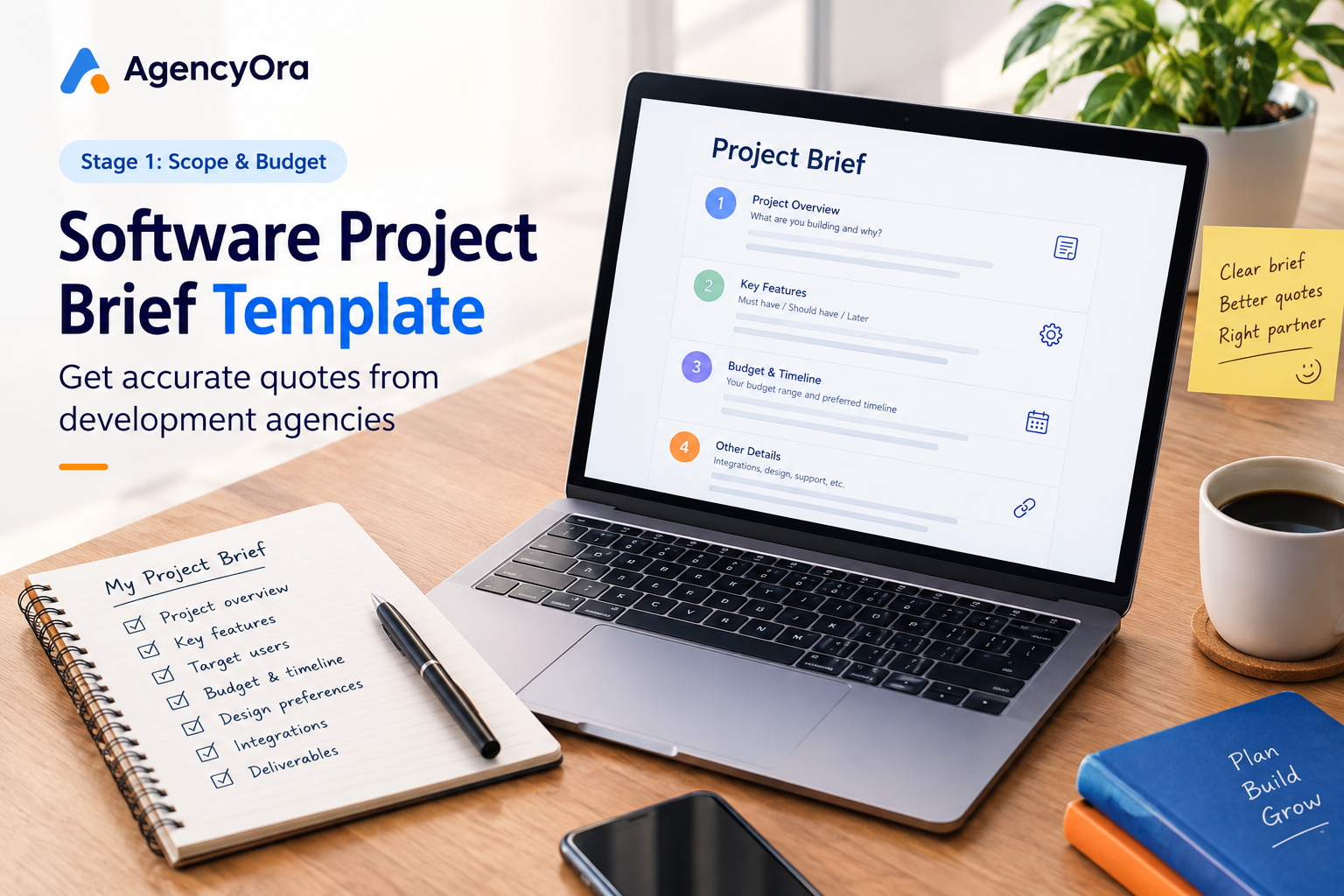
Software Project Brief Template: How to Get Accurate Quotes from Developers
Use this software project brief template to define your requirements, set a realistic budget, and get clearer, more comparable quotes from software development agencies.

ChatGPT SEO: How Businesses Can Get Found in AI Search
Want your business to appear in ChatGPT and AI search? Learn the practical website and content changes that can improve your AI search visibility.

How Much Does a Website Cost in 2026? What You’re Really Paying For
Wondering how much a website costs? Learn what affects website pricing and what to check before accepting a development quote.